Unit 1 · Foundation of DSA
Introduction to Data Structures and Algorithms
Your first step into the world of DSA — explained the simple way, with real-life examples a beginner can actually relate to.
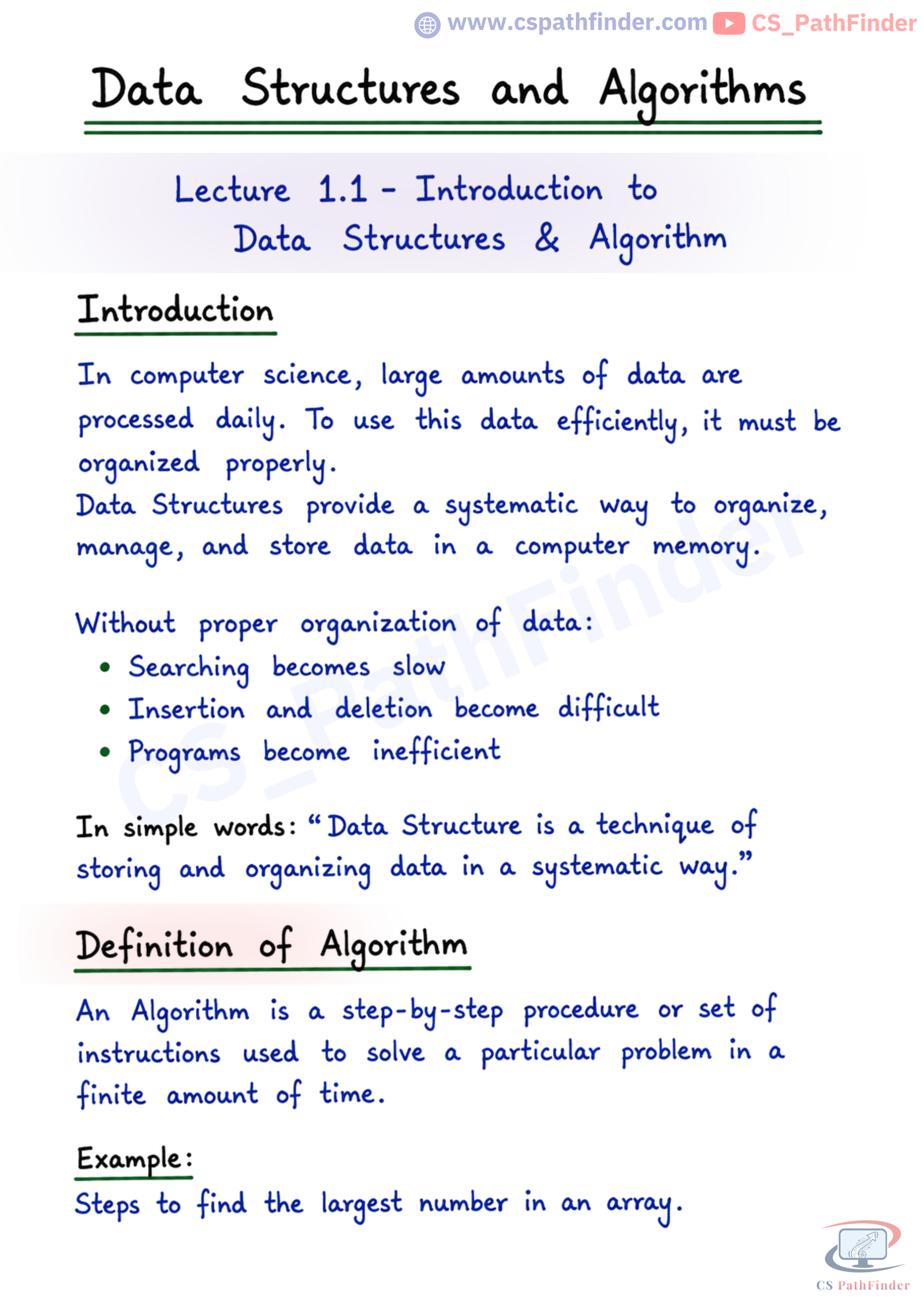
Introduction
If you have just started your journey in programming, you have probably heard the term DSA a hundred times already — in YouTube videos, on LinkedIn, from seniors, and definitely during placement season. But what is DSA, really? And why does literally every software engineer say you must learn it before appearing for interviews?
In simple words, Data Structures and Algorithms (DSA) is the study of how to store data efficiently and how to write steps (instructions) to solve problems using that stored data. It's not a programming language. It's not a tool. It is a way of thinking — a way of solving problems efficiently.
Think of it like this: knowing a programming language is like knowing how to use a hammer. DSA is what teaches you when and how to use that hammer to build something strong, fast, and reliable.
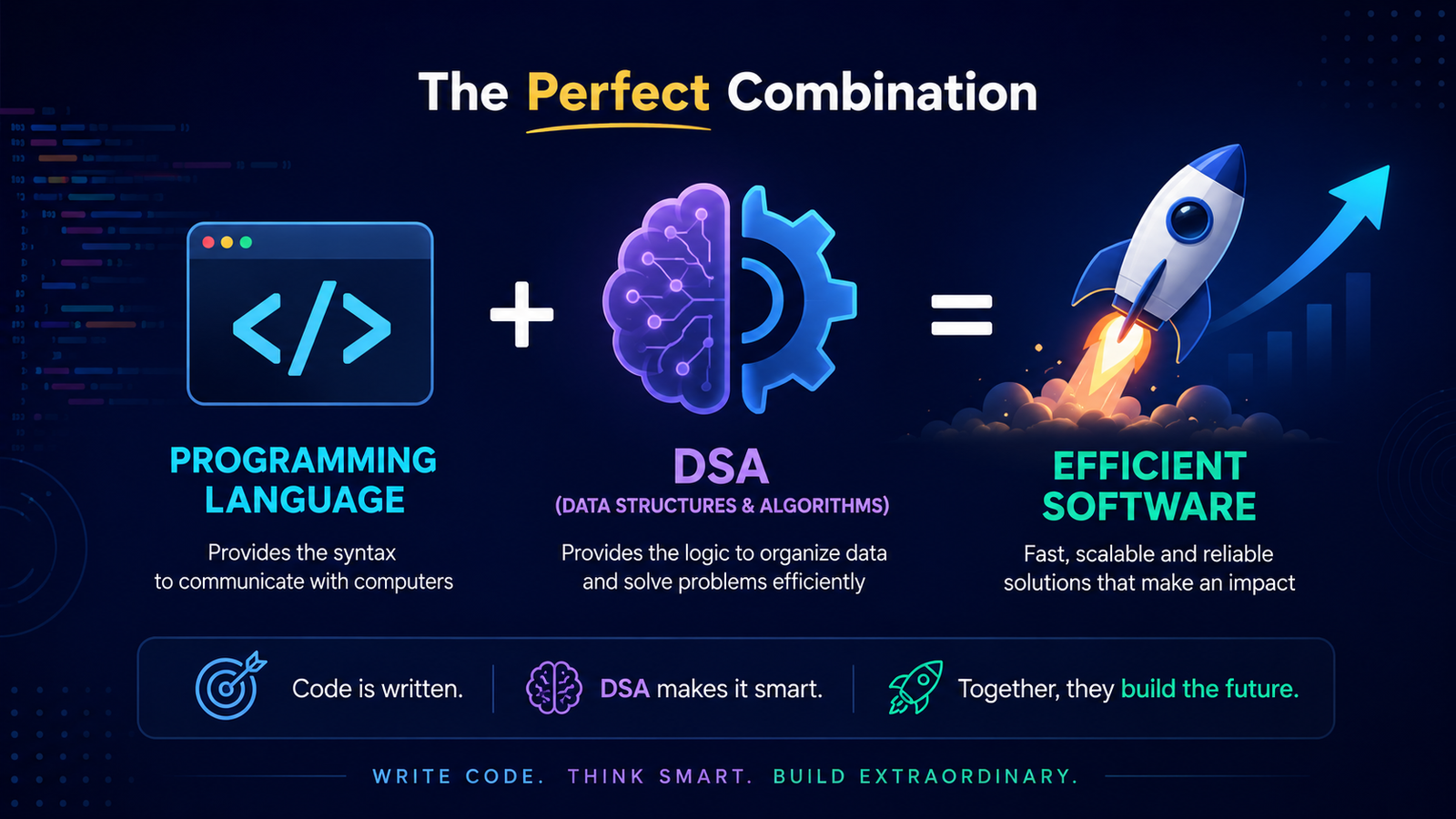
Table of Contents
Why Should You Learn DSA?
A lot of beginners ask — "I can already write code that works, so why do I need DSA?" Here's the honest answer: writing code that works is easy. Writing code that works fast, even when the data grows to millions of records, is what separates a good engineer from a great one.
Faster Programs
The right data structure can turn a program that takes minutes into one that takes milliseconds.
Better Problem Solving
DSA trains your brain to break big problems into small, manageable steps.
Software Development
Every app, website, and system you use is built on top of well-chosen data structures.
Placements
DSA is the core topic in almost every coding interview round at top companies.
Competitive Programming
Contests like Codeforces and LeetCode are basically DSA problems with a time limit.
Real World Applications
From Google Maps to Netflix recommendations — DSA powers it all behind the scenes.
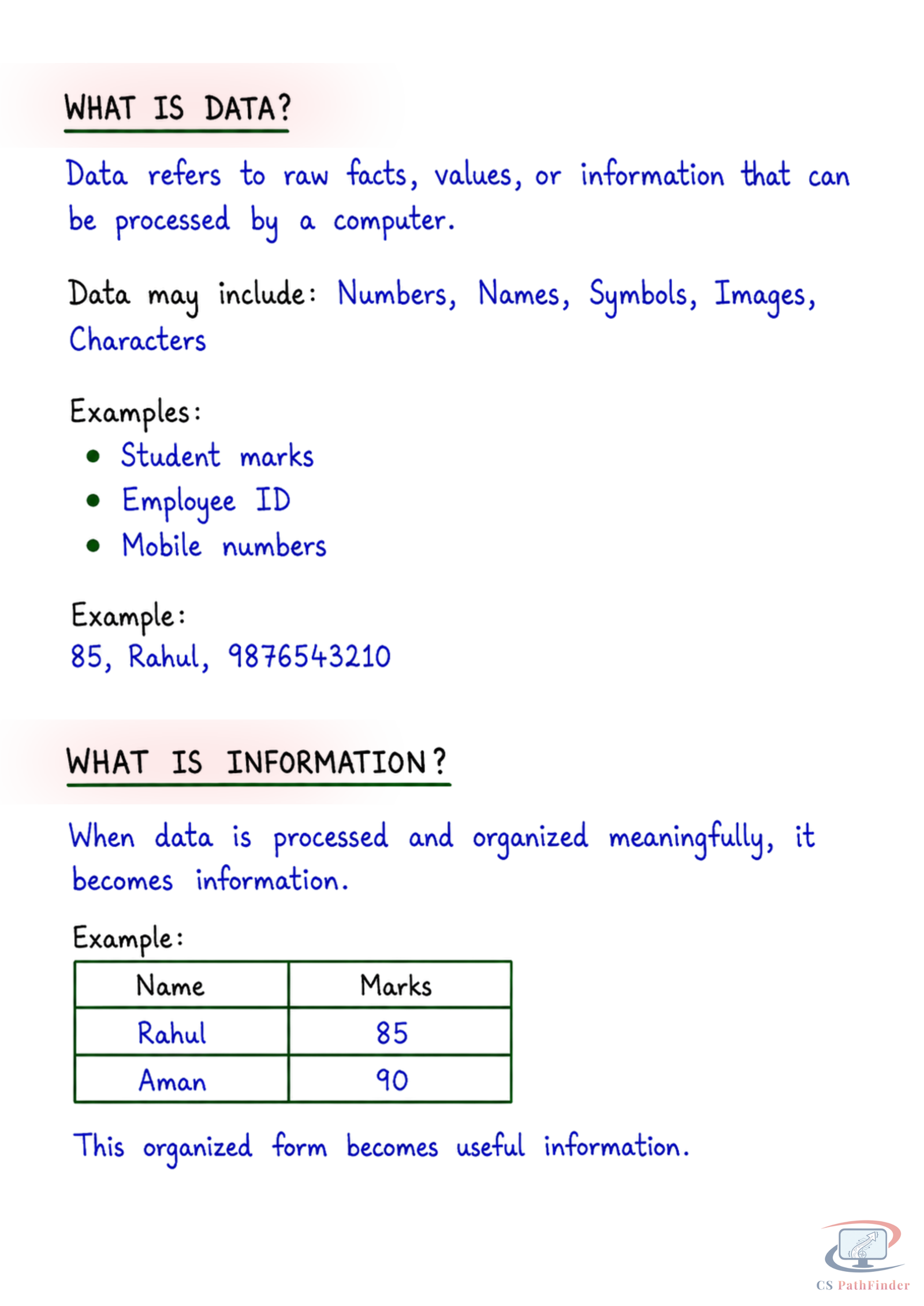
What is Data?
In the simplest terms, data is any piece of information that a computer can process. It could be a number, a name, an image, a video, or even a single character.
For example, when you save a contact in your phone — the name "Rahul", the phone number "9876543210", and the photo you attach are all data. On their own, they are just raw facts. The real value comes from how this data is organized and used.
What is Data Structure?
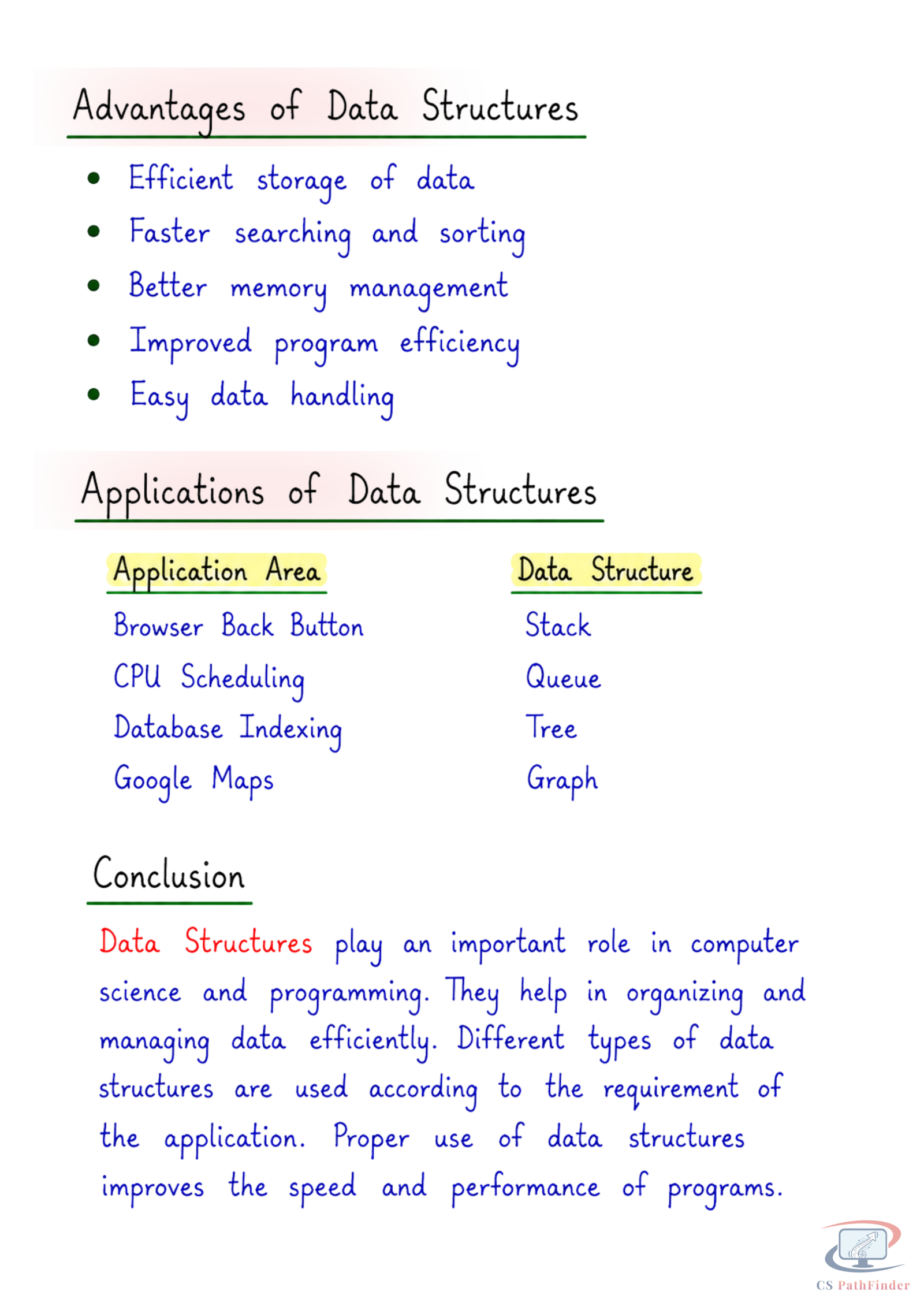
A Data Structure is simply a way of organizing and storing data so that it can be used efficiently. The way you arrange data directly affects how fast you can access, search, or modify it.
Imagine your clothes thrown randomly all over your room versus neatly folded in labeled drawers. Finding a specific T-shirt is painfully slow in the first case, and almost instant in the second. That's exactly what a good data structure does for your program's data.
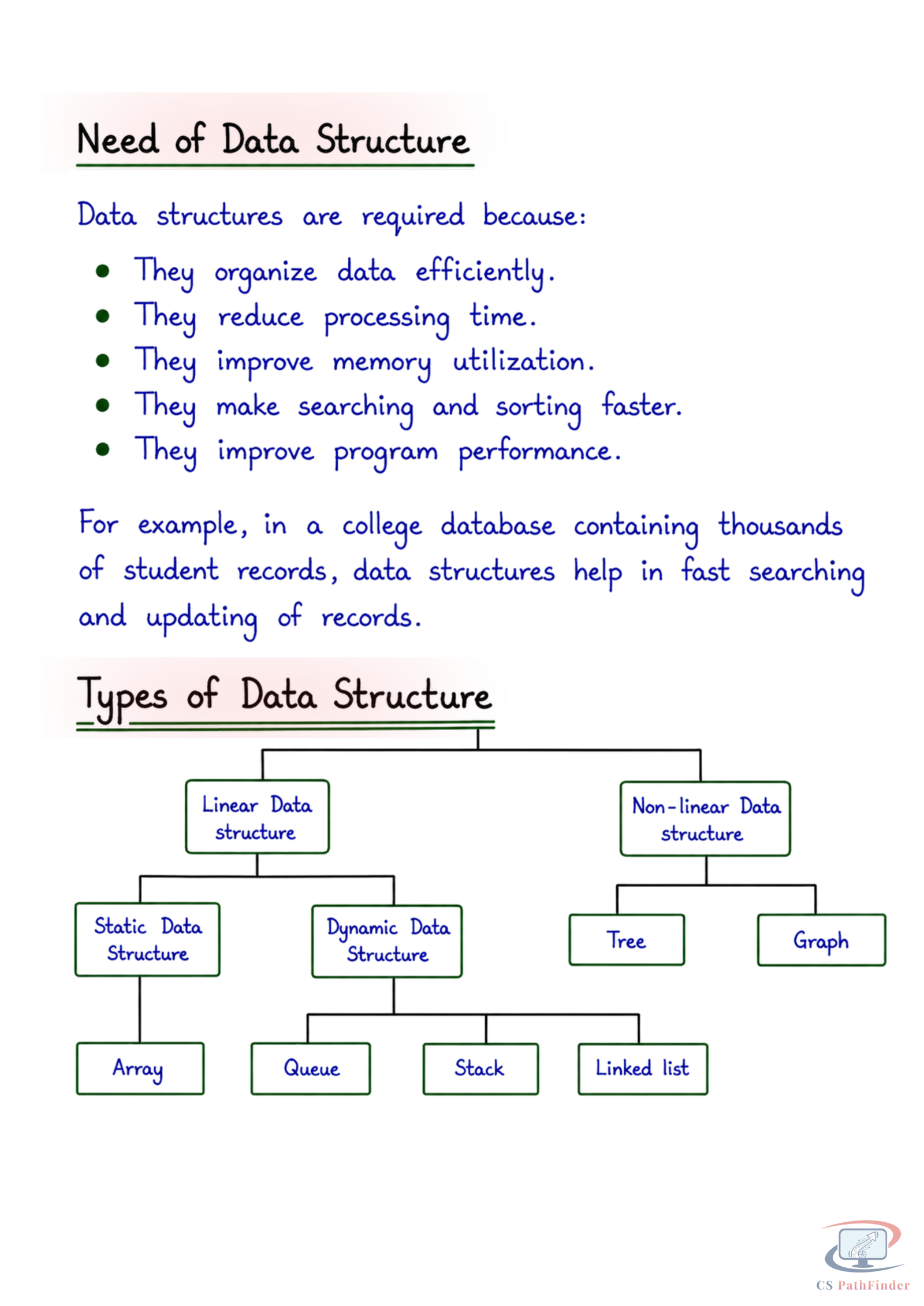
Tip: Common data structures include Arrays, Linked Lists, Stacks, Queues, Trees, Graphs, and Hash Tables. You'll learn each one step by step in this course.
What is Algorithm?
An Algorithm is a finite set of step-by-step instructions used to solve a specific problem. It doesn't have to involve a computer at all — even a cooking recipe is technically an algorithm.
Let's take a simple everyday example — making a cup of tea:
- Boil water in a pan
- Add tea leaves and sugar
- Add milk and let it boil
- Strain the tea into a cup
- Serve hot
Notice how each step is clear, ordered, and leads to a final result. A computer algorithm works exactly the same way — clear steps that take an input and produce the correct output.
Relationship Between Data, Data Structure and Algorithm
These three concepts always work together. Data is the raw material, a Data Structure is the container that organizes it, and an Algorithm is the set of steps that operates on that container to produce a result.
     Data
       ↓
  Data Structure
       ↓
    Algorithm
       ↓
 Efficient Solution
- Data — the raw facts you start with (e.g., a list of student marks).
- Data Structure — how you store that data (e.g., an array of marks).
- Algorithm — the steps used to process it (e.g., sorting the marks).
- Efficient Solution — the fast, correct result you finally get.
Real Life Example: The Library
Let's understand this with something you've definitely experienced — a library.
    Books
      ↓
    Shelf
      ↓
  Searching
      ↓
   Result
A library has thousands of books (data). These books are arranged on shelves by genre and author name (data structure). When you want to find a specific book, you follow a searching process (algorithm) — check the genre section, then scan author names alphabetically — and you get your result quickly.
Now imagine the same library with all books dumped randomly in one giant pile. Finding one book could take hours. This is exactly why organized storage — good data structures — saves massive amounts of time, both for humans and computers.
Where is DSA Used?
DSA isn't just an academic topic — it silently powers almost every app you use daily.
Google Search
Instagram Feed
YouTube Recommendations
Maps & Navigation
Operating Systems
Artificial Intelligence
Databases
Games
Banking Systems
Social Media
DSA Learning Roadmap
Here's the order in which you should ideally learn DSA topics — from easiest to most advanced:
  Introduction
       ↓
     Arrays
       ↓
  Linked Lists
       ↓
     Stacks
       ↓
     Queues
       ↓
     Trees
       ↓
     Graphs
       ↓
    Hashing
       ↓
Advanced Algorithms
Code Example
Here's a beginner-friendly C program that finds the largest number in an array — a tiny taste of how data (array) and algorithm (loop logic) work together:
#include <stdio.h>

int main() {
    int arr[] = {12, 45, 7, 89, 23};
    int n = 5;
    int largest = arr[0];

    for (int i = 1; i < n; i++) {
        if (arr[i] > largest) {
            largest = arr[i];
        }
    }

    printf("Largest number is: %d", largest);
    return 0;
}
Output: Largest number is: 89
Key Points
- DSA stands for Data Structures and Algorithms.
- Data Structure = how data is stored. Algorithm = steps to process that data.
- Good DSA knowledge leads to faster, more efficient programs.
- DSA is the foundation of coding interviews and competitive programming.
- Almost every app you use today relies on DSA under the hood.
Interview Tip
DSA is not about memorizing code. It is about choosing the right data structure to solve a problem efficiently.
Common Beginner Mistakes
- Memorizing code instead of understanding the logic behind it
- Ignoring time and space complexity while solving problems
- Jumping directly to Trees or Graphs without mastering Arrays and Linked Lists first
- Not practicing enough — DSA is a skill, not a theory subject
Quick Revision
| Concept | Meaning | Importance |
|---|---|---|
| Data | Raw facts or values | Foundation of every program |
| Data Structure | Way of organizing data | Improves access & storage speed |
| Algorithm | Steps to solve a problem | Improves processing efficiency |
| DSA | Combination of both | Core skill for interviews & development |
Summary
DSA is the foundation of efficient programming. Data is the raw information you work with, a Data Structure decides how you organize it, and an Algorithm decides how you process it. Together, they help you build software that is fast, scalable, and reliable. As you move ahead in this course, you'll learn each data structure in detail and see exactly how and where to use it.